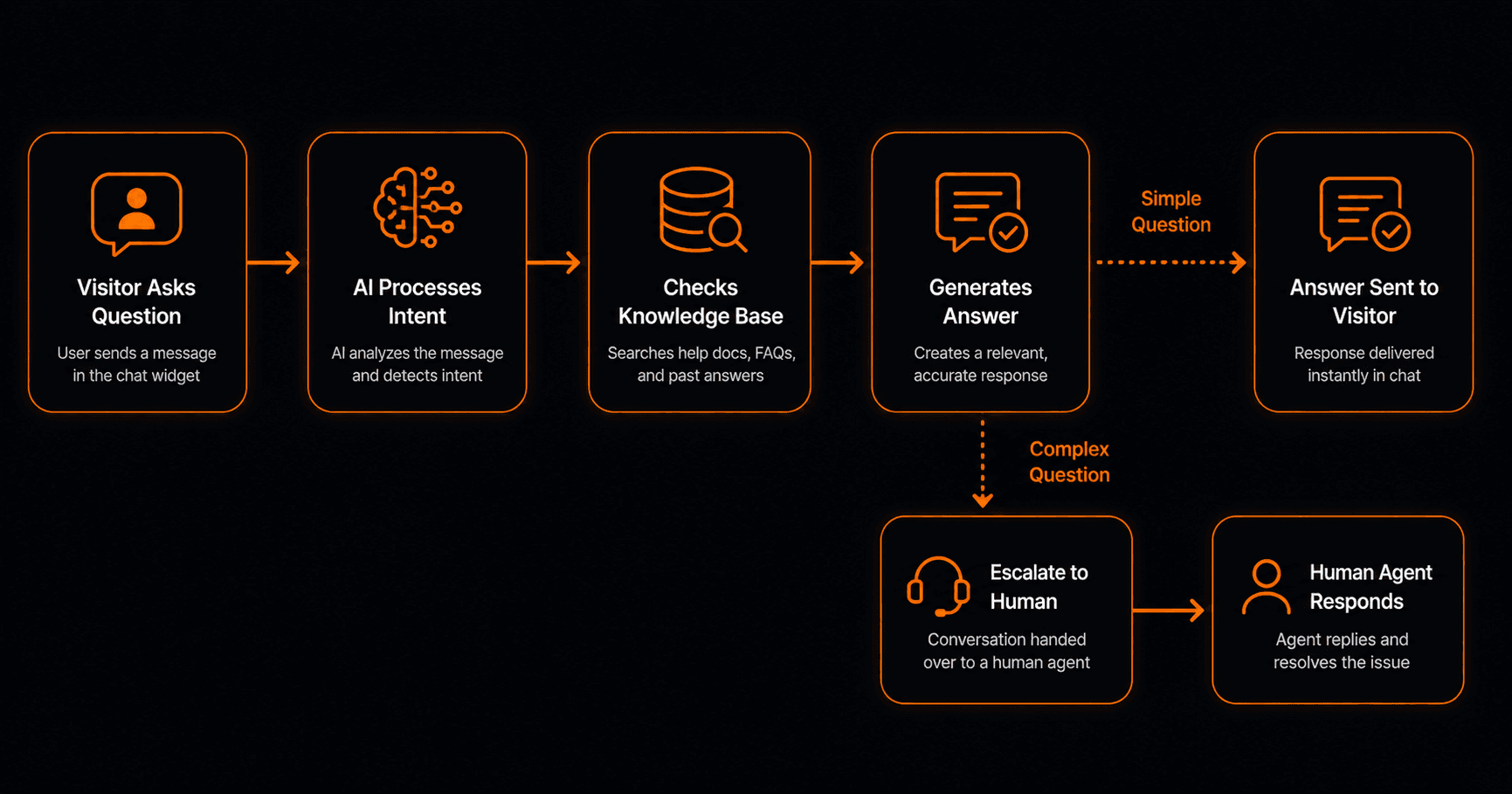
Most businesses have basic workflow automation — a Zap here, an email sequence there. Hyper-automation is the next level: the systematic identification and automation of every automatable process in an organisation, using AI, RPA, multi-agent pipelines, and process intelligence working together. It's not a single tool — it's an operating philosophy. Here's what it is, how it works, and whether your business is ready for it.
Defining Hyper-Automation
Gartner coined the term “hyper-automation” and identified it as one of the top strategic technology trends for multiple consecutive years. The definition: the application of advanced technologies (AI, machine learning, RPA, process mining, and integration platforms) to automate as many processes as possible, as completely as possible.
The key word is “systematic.” Basic automation is opportunistic — someone builds an automation when they notice a repetitive task. Hyper-automation is methodical: you audit every process in the organisation, classify each by automability, and build an automation roadmap that covers all of them. The goal is an organisation where human work is reserved for judgment, creativity, and relationship-building — and everything else runs automatically.
The Four Pillars of Hyper-Automation
Hyper-automation combines four technology layers. Robotic Process Automation (RPA) handles tasks that require interacting with legacy systems that don't have APIs — clicking through interfaces, copying data between desktop applications, filling forms. AI handles unstructured data — reading emails, classifying documents, generating responses, making predictions. Integration platforms connect modern APIs and orchestrate multi-step workflows. Process intelligence tools (process mining software) analyse actual system logs to discover where bottlenecks and manual work exist.
Each layer addresses different automation challenges. A sophisticated hyper-automation implementation uses all four in combination: process mining discovers the opportunities, RPA handles legacy system interactions, AI handles intelligence and judgment, and integration platforms connect everything into coherent end-to-end workflows.
AI Agents: The Core of Modern Hyper-Automation
The development that has most accelerated hyper-automation in 2025–2026 is the emergence of reliable AI agents — AI systems that can take actions, not just generate text. An AI agent can research a company, draft a personalised email, send it, monitor for a reply, update a CRM record, and schedule a follow-up — all without human intervention at each step. Multi-agent pipelines chain multiple specialised agents: one for research, one for drafting, one for quality review, one for dispatch.
Platforms like Vendarwon Flow enable multi-agent automation without requiring custom AI infrastructure. You describe what you want each agent to do in plain English; the platform handles the orchestration. This democratises hyper-automation — it's no longer reserved for enterprises with dedicated AI engineering teams.
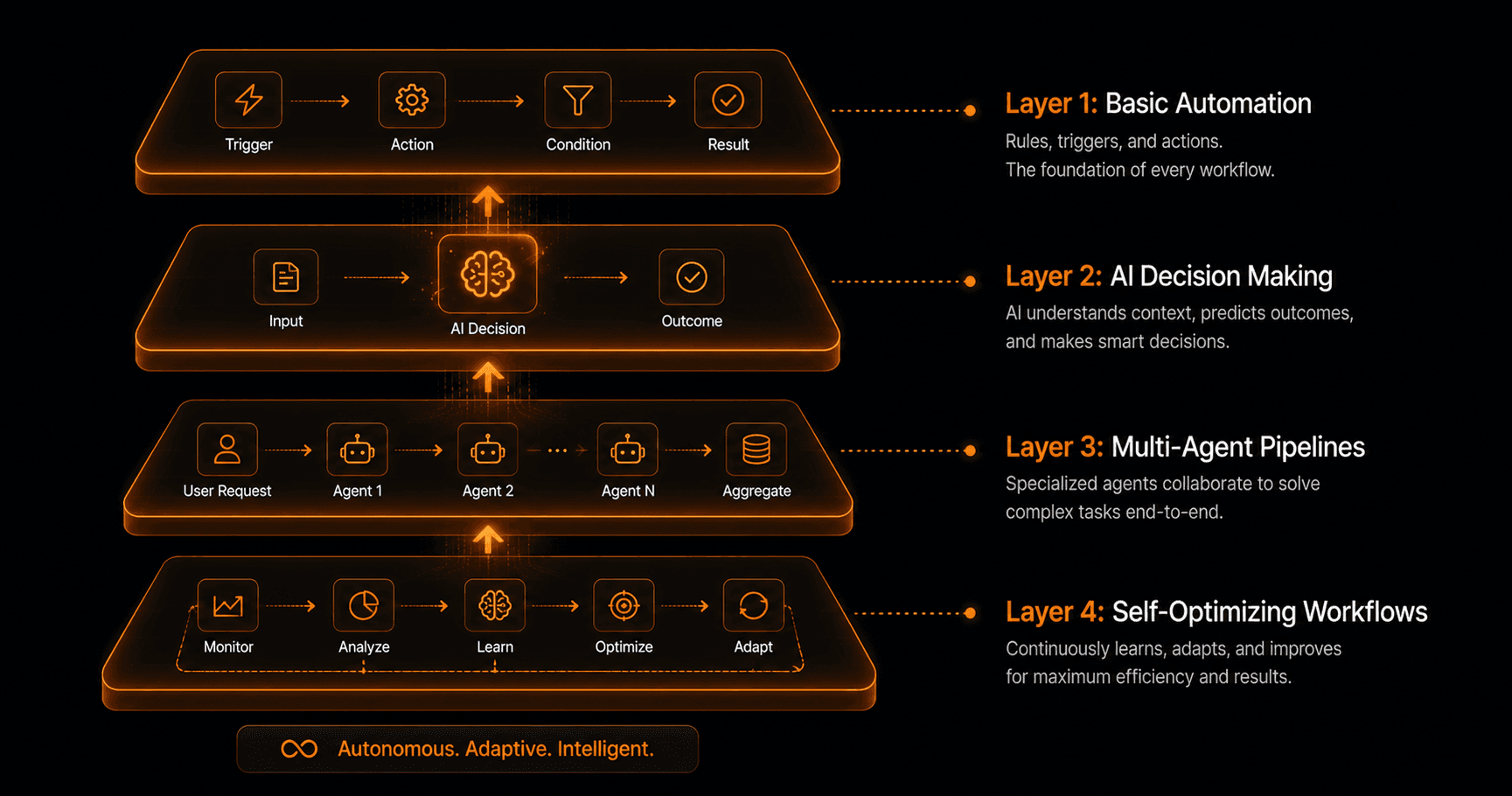
Hyper-automation architecture: process discovery feeds the automation roadmap; AI agents, RPA, and integration platforms execute across all identified processes
Process Mining: Discovering What to Automate
One of the biggest challenges in hyper-automation is identifying which processes to automate first. Process mining software (Celonis, UiPath Process Mining, IBM Process Mining) analyses event logs from your ERP, CRM, and other systems to reconstruct the actual flow of every process — revealing bottlenecks, deviations, and manual intervention points that weren't visible before.
For organisations without process mining tools, a structured process audit works: interview department heads, shadow front-line staff, and document every recurring task with its frequency, duration, and error rate. Rank tasks by automation ROI (time saved per week × hourly cost ÷ automation build time) and work through the list top-down.
Hyper-Automation for SMBs: The Practical Version
For small and medium businesses, enterprise-grade hyper-automation with dedicated RPA infrastructure and process mining software is overkill. The SMB version is simpler: systematically audit your repetitive processes, build automations for the highest-ROI ones using modern no-code platforms, and progressively expand coverage over time.
Start with the processes that take the most time and have the clearest automation path: lead follow-up, invoice processing, customer onboarding, report generation, social media posting. Once these are running, audit the next tier. The goal is the same as enterprise hyper-automation — comprehensive automation coverage — achieved through a more accessible technology stack and a lower upfront investment.
Measuring Hyper-Automation ROI
Track automation coverage (what percentage of your identified automatable processes are currently automated), hours saved per week per automation, error rate reduction (manual processes have human error rates; automated processes have near-zero), and cost per automated execution versus manual execution cost. A well-executed hyper-automation programme typically delivers ROI within 3–6 months for the first wave of automations.
FAQ
Is hyper-automation only for large enterprises?
No — the concept applies to any organisation. The technology required for hyper-automation has become accessible to SMBs through no-code automation platforms. What changes at enterprise scale is the process mining infrastructure and the RPA layer needed for legacy systems. For modern-stack businesses, no-code platforms handle most of the automation needs that enterprises use RPA for.
What's the difference between hyper-automation and regular automation?
Regular automation is tactical: you identify a specific repetitive task and automate it. Hyper-automation is strategic: you systematically identify and automate every automatable process across the organisation, using a combination of AI, RPA, and integration platforms. It's the difference between automation as a productivity hack and automation as an operating model.
What are the biggest risks of hyper-automation?
Over-automation (automating processes that benefit from human judgment), brittle automations that break when upstream systems change, and inadequate monitoring (failing to detect when automations produce incorrect outputs). Mitigate these by building error branches into every workflow, monitoring automation performance metrics weekly, and maintaining a human review step for high-stakes automated outputs.
How do I get executive buy-in for a hyper-automation initiative?
Start with a pilot: identify one high-ROI process, automate it, measure the time and cost savings over 30 days, and present the numbers. A well-chosen pilot automation often saves 5–10 hours/week per person involved. Extrapolating those savings across the organisation makes a compelling business case without requiring the full programme investment upfront.